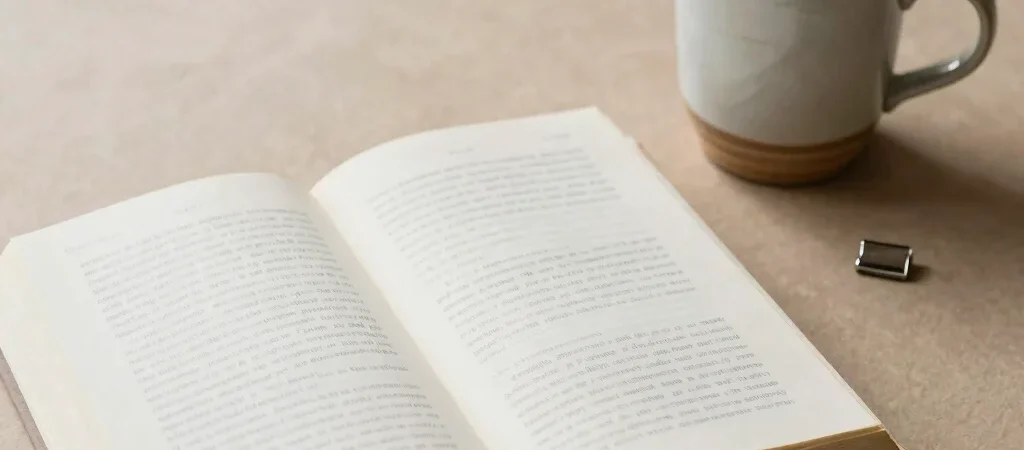
The kettle clicked off halfway through a paragraph, and I closed the book with one finger marking the page. For years, I treated stopping midpage as a small failure: the chapter should be finished, the thought neatly tied, the reading session complete. But a good sentence can travel farther when you leave it unfinished in your mind.
Leave Room to Return
A chapter ending gives you a tidy place to stop, but it can also turn reading into a task with a finish line. When I put a book down beside the kettle or at the end of a lunch break, I often find myself returning to the exact image I left behind: a train slipping through fog, a hand resting on a table, rain collecting along a windowsill.
The next read does not need a cleared evening or a perfect chair. It can begin with three pages while the tea cools. That small opening is often more inviting than waiting for an hour that never quite appears.
Find Your Way Back
A loose bookmark, a penciled line, or a note in the margin can make a return feel effortless. I like to mark the sentence that has stayed with me, not the sentence that seems most important. It gives me a clear path into the story without asking me to remember where I meant to begin.
This is especially useful with short stories and essays, where a single detail can hold the whole piece in place. Leave the book open beside the mug ring or tuck it into your bag before stepping out. Make the invitation visible.
Let Reading Breathe
Reading at your own pace means allowing the page to fit around an actual day, not an ideal one. Some afternoons give you a chapter; some give you a paragraph and a thought to carry down the block. Both count as time with the writing.
So stop when the kettle calls, even if you are in the middle of a page. Leave the book where you can see it, and let the sentence keep you company until you return.