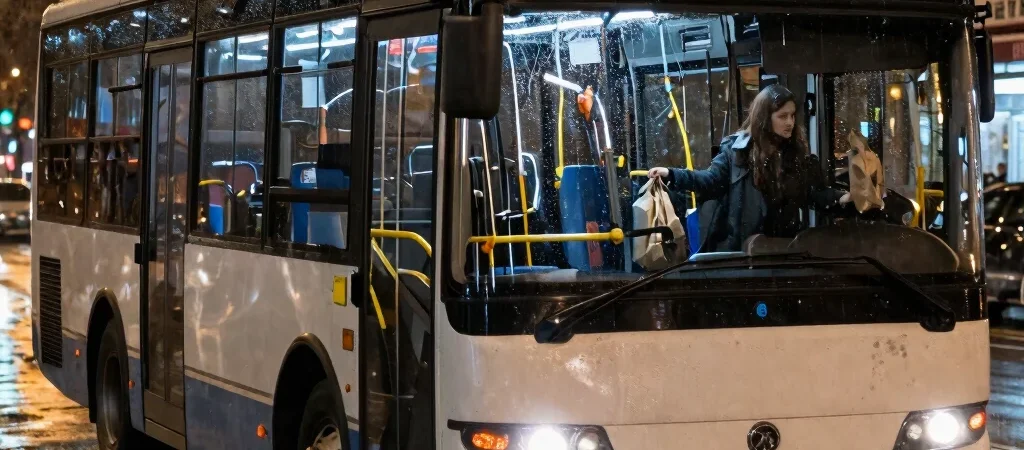
By the time Mara reached the bus stop, rain had darkened the shoulders of her coat and softened the ink on the grocery receipt in her pocket. The bus was already there, its windows clouded, its interior lights turning every passenger into a quiet room. She climbed aboard with a paper bag of pears and said, “Cedar Street,” though the driver knew.
A Familiar Route
He had driven the evening route for years, long enough to remember who carried flowers on Fridays and who always counted change twice. Mara usually sat behind the middle door and watched the blocks slip by. Tonight she stayed near the front, holding the paper bag in both hands as if it might keep the evening from tipping.
At the next stop, an old man climbed on with a folded umbrella and a small white dog tucked inside his coat. The dog looked out at Mara, patient and solemn. She smiled before she meant to, and the driver caught it in the mirror.
One Stop Further
When the bus reached Cedar, Mara did not pull the cord. The apartment above the laundromat was dark; her sister had moved out that morning, leaving one key on the kitchen counter and a note that said she would call. Mara had spent the day deciding what the note meant, then deciding not to decide.
The driver glanced back but kept the bus moving. A few blocks later, he stopped beside a late-night bakery, where the windows were fogged gold and someone was stacking trays. “You can get off here,” he said. “The walk back is dry under the awnings.”
The Warm Windows
Mara stepped down into the rain. She bought nothing; she stood beneath the bakery awning and watched the baker brush flour from his hands. The paper bag had begun to leak, and one pear pressed a soft bruise against its side.
When she started walking, she turned toward Cedar Street. The dark apartment would still be there, and so would the key. For now, there was the rain easing on the pavement, the smell of warm bread, and one more block before she had to go home.